Herspices
Tamarind Seeds
Tamarind Seeds
Couldn't load pickup availability
Tamarind Seeds (Imli Seeds)
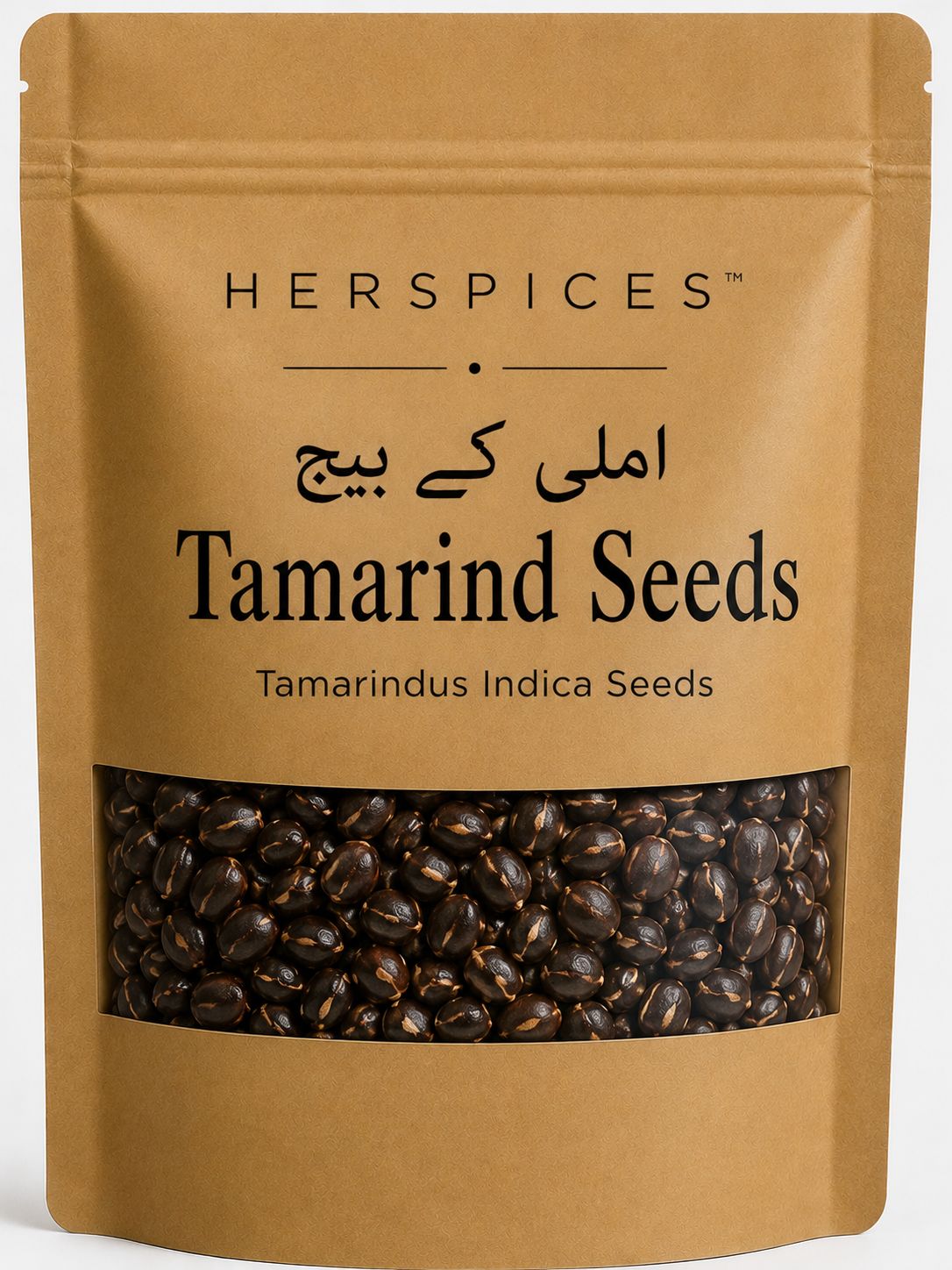
Tamarind Seeds are the hard, glossy seeds found inside the pods of the tamarind tree (Tamarindus indica). While tamarind pulp is widely known for its sweet and tangy flavour, the seeds themselves have a distinct identity and have been recognized in traditional ingredient markets for generations.
Unlike culinary seeds such as Sesame or Sunflower Seeds, Tamarind Seeds originate from a tropical fruit tree and are valued for their unique appearance, dense structure and botanical significance. Their rich brown colour and polished surface make them one of the most visually distinctive seeds found in traditional markets.
At HERSPICES, our Tamarind Seeds are carefully selected and packed to preserve their natural quality, appearance and freshness.
The Hidden Seed Inside Every Tamarind Pod
Most people associate tamarind with its sticky fruit pulp used in cooking and beverages.
However, inside every mature tamarind pod are several hard seeds that develop alongside the fruit.
Once separated from the pulp, cleaned and dried, these seeds become a traditional ingredient with their own identity and market demand.
This connection to one of the world's most popular tropical fruits makes Tamarind Seeds unique among seed products.
Recognizing Quality Tamarind Seeds
Premium Tamarind Seeds typically display:
- Hard glossy surface
- Dark brown to reddish-brown colour
- Rounded square-like shape
- Smooth texture
- Mature seed appearance
Because Tamarind Seeds are natural agricultural products, slight variation in size and shape is expected.
Botanical Profile
Tamarind Seeds are obtained from:
Scientific Name: Tamarindus indica
The tamarind tree is widely cultivated across:
- Pakistan
- India
- Africa
- Southeast Asia
- Middle East
- Tropical regions worldwide
Known for its longevity and large canopy, the tamarind tree is one of the most recognized fruit-bearing trees in tropical agriculture.
Naturally Occurring Plant Constituents
Tamarind Seeds naturally contain:
- Plant proteins
- Polysaccharides
- Dietary fibre
- Natural carbohydrates
- Minerals
- Plant antioxidants
These naturally occurring components contribute to the seed's botanical importance.
One of the Hardest Edible Seeds in Nature
A defining characteristic of Tamarind Seeds is their remarkable hardness.
Quality Tamarind Seeds are known for:
- Dense structure
- Strong seed coat
- Long storage stability
- Distinctive polished appearance
This natural durability helps preserve seed quality during storage and transportation.
Traditional Applications
For generations, Tamarind Seeds have been incorporated into:
- Traditional ingredient preparations
- Botanical seed collections
- Herbal ingredient blends
- Regional applications
- Traditional processing methods
Preparation techniques vary according to local traditions and intended uses.
Tamarind Seeds vs Tamarind Pulp
Many consumers are familiar with tamarind pulp but not the seeds.
Tamarind Pulp
- Soft texture
- Sweet and tangy flavour
- Culinary ingredient
- Common in sauces and beverages
Tamarind Seeds
- Hard structure
- Dense seed coat
- Botanical ingredient
- Distinct traditional uses
Although they originate from the same fruit, they serve very different purposes.
Storage Recommendations
Store in a cool, dry place away from moisture and direct sunlight. Keep the pouch tightly sealed after opening to maintain freshness and preserve seed quality.
Why Choose HERSPICES Tamarind Seeds?
- Carefully selected mature seeds
- Authentic Tamarindus indica source
- Naturally dried and cleaned
- Cleanly packed for freshness
- Suitable for traditional ingredient applications
- Delivered across Pakistan
FAQ
What are Tamarind Seeds?
Tamarind Seeds are the hard seeds found inside mature tamarind pods produced by the Tamarindus indica tree.
What do Tamarind Seeds look like?
They typically appear as glossy dark brown seeds with a hard surface and rounded shape.
Are Tamarind Seeds from the same fruit used in cooking?
Yes. Tamarind Seeds come from the same tamarind pods that contain the well-known sweet and tangy pulp.
Why are Tamarind Seeds so hard?
They naturally develop a dense protective seed coat that helps preserve the seed and supports long-term viability.
What is the scientific name of the tamarind tree?
The scientific name is Tamarindus indica.
How should Tamarind Seeds be stored?
Store them in a sealed pouch or container in a cool, dry place away from moisture and direct sunlight.
Share