Herspices
Shatavari Root
Shatavari Root
Couldn't load pickup availability
Shatavari Root (Asparagus racemosus)
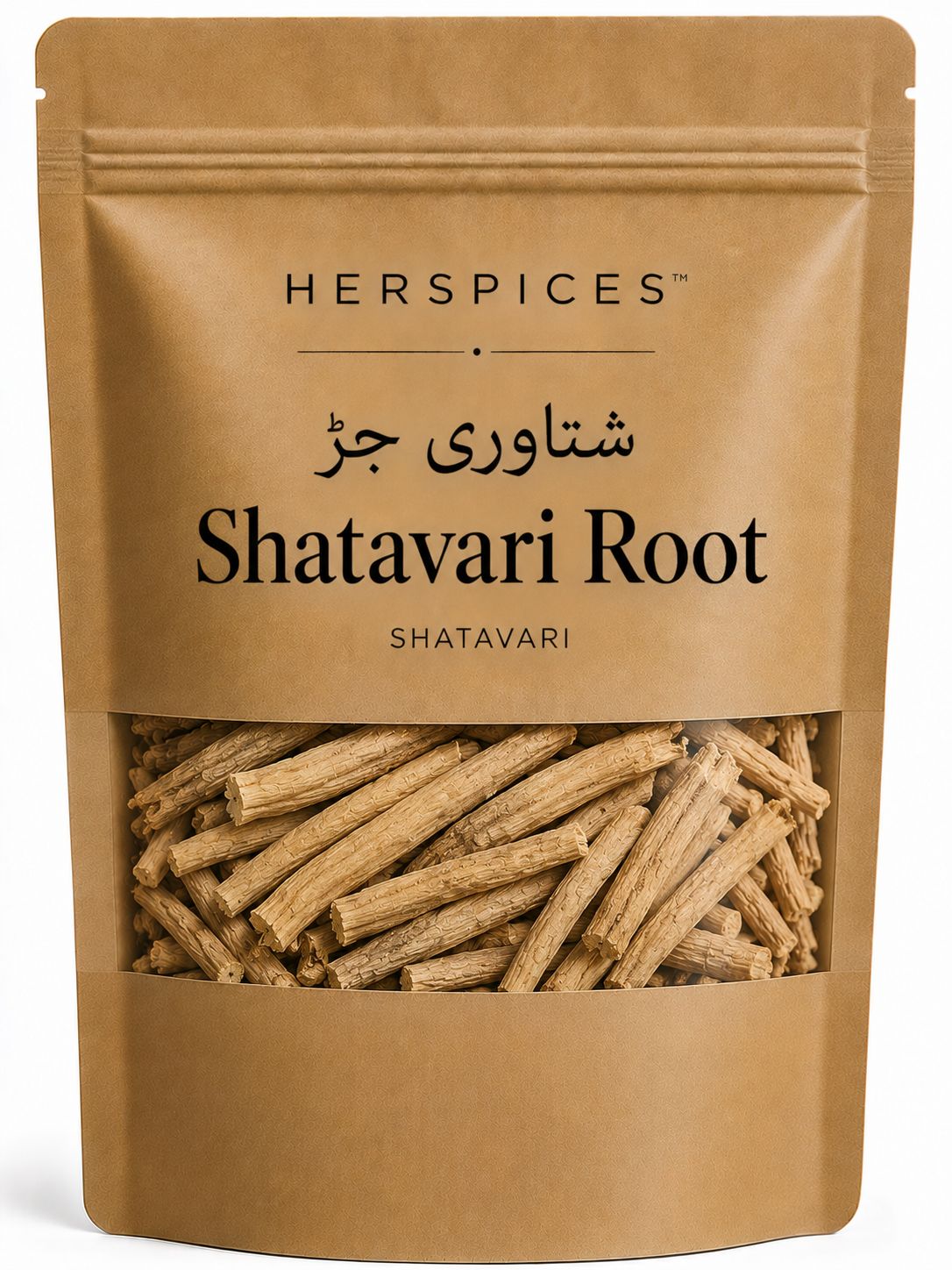
Shatavari Root is one of the most recognized roots in traditional South Asian herbal traditions. Obtained from the plant Asparagus racemosus, Shatavari is distinguished by its cluster of slender underground roots that develop naturally beneath the plant as it matures.
Unlike thick woody roots such as Ashwagandha or Chob Cheeni, Shatavari is known for its elongated, finger-like root structure and naturally light colour. These characteristics make it easily identifiable among traditional herbal ingredients.
For generations, Shatavari Root has remained an important ingredient in traditional herbal preparations across South Asia, where it continues to be valued for its long history and botanical significance.
At HERSPICES, our Shatavari Root is carefully selected and packed to preserve its natural appearance, aroma and quality.
Recognizing Authentic Shatavari Root
One of the defining features of Shatavari is its distinctive root system.
Quality dried Shatavari Root typically displays:
-
Long, slender root pieces
-
Cream to light beige coloration
-
Naturally fibrous structure
-
Smooth outer surface
-
Variation in length and thickness
Because Shatavari is a naturally harvested root, variation in shape and size is expected and reflects the authenticity of the ingredient.
Botanical Background
Shatavari belongs to the asparagus family and is scientifically known as Asparagus racemosus.
The plant grows naturally across:
-
Pakistan
-
India
-
Nepal
-
Sri Lanka
-
Bangladesh
Its underground root network develops over time, producing the characteristic roots traditionally harvested for drying and storage.
The Meaning Behind the Name
The name "Shatavari" has been associated with traditional Ayurvedic literature for centuries and remains one of the most frequently referenced roots in classical herbal systems.
Its longstanding cultural importance has contributed to its continued popularity in traditional ingredient markets throughout South Asia.
Naturally Occurring Plant Constituents
Shatavari Root contains a range of naturally occurring plant compounds, including:
-
Saponins
-
Flavonoids
-
Alkaloids
-
Polyphenols
-
Natural antioxidants
These naturally occurring constituents contribute to the botanical significance of the plant.
Traditional Uses
For generations, Shatavari Root has been incorporated into:
-
Traditional herbal preparations
-
Botanical powders
-
Herbal decoctions
-
Classical herbal formulations
-
Traditional ingredient blends
Methods of preparation vary according to regional traditions and individual preferences.
Appearance, Aroma and Texture
Dried Shatavari Root is known for its light colour, mild aroma and naturally fibrous texture.
Unlike aromatic rhizomes such as Nagar Motha or strongly scented herbs, Shatavari possesses a comparatively subtle natural aroma, making its visual characteristics particularly important for identification.
Storage Recommendations
Store in a cool, dry place away from direct sunlight and moisture. Reseal the package after opening to preserve freshness and maintain the root's natural quality.
Why Choose HERSPICES Shatavari Root?
-
Carefully selected root pieces
-
Naturally dried appearance
-
Authentic botanical ingredient
-
Cleanly packed for freshness
-
Suitable for traditional herbal preparations
-
Delivered across Pakistan
FAQ
What is Shatavari Root?
Shatavari Root is the dried root of Asparagus racemosus, a plant widely recognized in traditional South Asian herbal systems.
What does Shatavari Root look like?
It typically appears as long, slender cream-coloured root pieces with a naturally fibrous structure.
Is Shatavari Root the same as Asparagus racemosus?
Yes. Asparagus racemosus is the scientific name of the plant commonly known as Shatavari.
Why are Shatavari roots different sizes?
As a naturally harvested agricultural product, root size varies according to plant age, growing conditions and harvest timing.
Does Shatavari Root have a strong aroma?
Shatavari generally has a mild natural aroma compared to many aromatic roots and rhizomes.
How should Shatavari Root be stored?
Store it in a sealed pouch or container in a cool, dry place away from moisture and direct sunlight.
Share