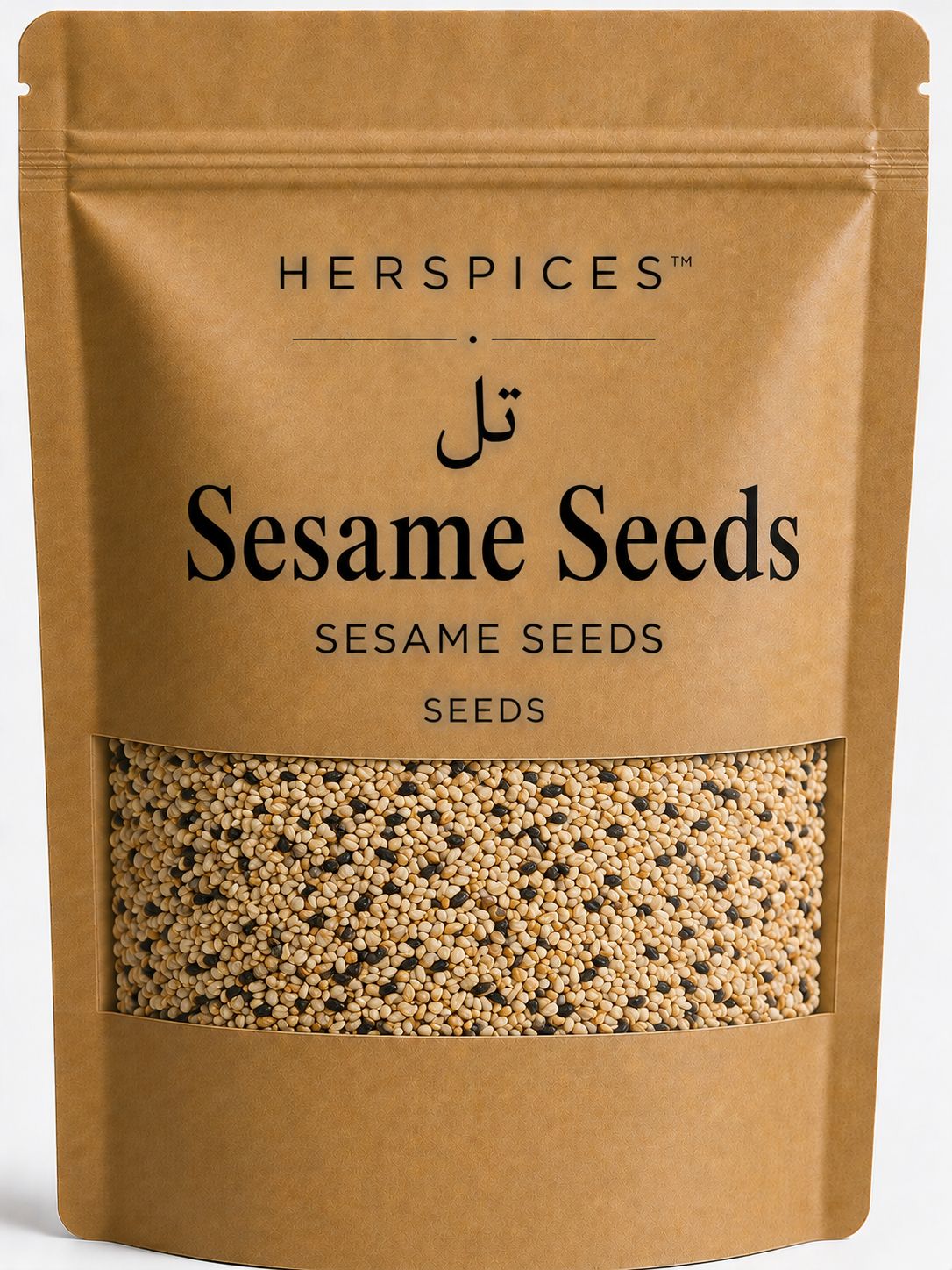
Herspices
Sesame Seeds
Sesame Seeds
Couldn't load pickup availability
Sesame Seeds (Til Seeds)
Sesame Seeds, commonly known as Til Seeds, are among the oldest cultivated oilseeds in human history. Valued for thousands of years across Asia, the Middle East and Africa, these tiny seeds continue to be an essential ingredient in traditional foods, baking, confectionery and everyday cooking.
Known for their rich nutty flavour and impressive nutritional profile, Sesame Seeds remain one of the most widely consumed seeds in Pakistan. Whether sprinkled over bread, blended into traditional sweets or used in homemade recipes, sesame seeds have earned a permanent place in kitchens around the world.
At HERSPICES, our Sesame Seeds are carefully selected and packed to preserve freshness, flavour and natural quality.
One of the World's Oldest Food Crops
Few seeds have a history as long as sesame.
Archaeological evidence suggests sesame has been cultivated for thousands of years, making it one of the earliest known oilseed crops.
Its popularity spread because of:
- Rich natural oils
- Long shelf life
- Versatile culinary uses
- Pleasant nutty flavour
- Nutritional value
Today, sesame remains an important ingredient across countless cuisines and food traditions.
Naturally Rich in Calcium
One of the most searched nutritional benefits of Sesame Seeds is their calcium content.
Sesame Seeds naturally contain:
- Calcium
- Magnesium
- Phosphorus
- Zinc
- Copper
- Iron
These minerals contribute to their reputation as one of the most nutrient-dense edible seeds available.
Plant-Based Protein and Healthy Fats
Sesame Seeds naturally provide:
- Plant protein
- Unsaturated fats
- Dietary fibre
- Essential fatty acids
This balance of nutrients makes them a valuable addition to both traditional and modern diets.
Nutritional Profile of Sesame Seeds
Sesame Seeds naturally contain:
- Protein
- Healthy fats
- Dietary fibre
- Calcium
- Magnesium
- Iron
- Zinc
- Copper
- Plant antioxidants
Their nutrient density is one reason sesame has remained popular across generations.
A Traditional Favourite in Pakistan
Sesame Seeds are deeply connected to traditional food culture throughout Pakistan.
They are commonly used in:
- Til Patti
- Gajak
- Chikki
- Traditional sweets
- Bakery products
- Bread toppings
- Seed blends
- Regional recipes
Their distinctive flavour and texture make them suitable for both sweet and savoury dishes.
White vs Black Sesame Seeds
Consumers often encounter multiple sesame varieties.
White Sesame Seeds
- Mild flavour
- Popular for baking
- Common in sweets
- Cream-coloured appearance
Black Sesame Seeds
- Stronger flavour
- Dark appearance
- Popular in specialty recipes
- Rich traditional use
Both varieties belong to the same sesame family but differ slightly in taste and appearance.
Why Sesame Seeds Are Popular Worldwide
Unlike some seeds that serve a single purpose, sesame is valued for multiple reasons:
- Culinary versatility
- Oil production
- Nutritional value
- Traditional food applications
- Distinctive flavour
This versatility has helped sesame remain one of the world's most important edible seeds.
Appearance and Quality
Premium Sesame Seeds typically display:
- Uniform mature seeds
- Clean appearance
- Natural cream-white colour
- Fresh aroma
- Proper drying
Quality seeds should appear fresh and free from excessive dust or impurities.
Storage Recommendations
Store in a cool, dry place away from direct sunlight and moisture. Keep the pouch tightly sealed after opening to preserve freshness and protect the natural oils within the seeds.
Why Choose HERSPICES Sesame Seeds?
- Carefully selected premium seeds
- Naturally rich in calcium and minerals
- Source of plant protein and healthy fats
- Cleanly packed for freshness
- Suitable for traditional and modern recipes
- Delivered across Pakistan
FAQ
What are Sesame Seeds?
Sesame Seeds, also known as Til Seeds, are edible oilseeds widely used in cooking, baking and traditional foods.
Are Sesame Seeds rich in calcium?
Yes. Sesame Seeds are naturally rich in calcium and several other essential minerals.
What are Sesame Seeds used for?
They are commonly used in sweets, bakery products, bread toppings, seed blends and traditional recipes.
What do Sesame Seeds taste like?
Sesame Seeds have a mild, nutty flavour that becomes richer when lightly roasted.
What is the difference between white and black sesame seeds?
White sesame seeds generally have a milder flavour, while black sesame seeds often possess a stronger, more robust taste.
How should Sesame Seeds be stored?
Store them in a sealed pouch or container in a cool, dry location away from moisture and direct sunlight.
Share