Herspices
Ratan Jot
Ratan Jot
Couldn't load pickup availability
Ratan Jot (Alkanet Root)
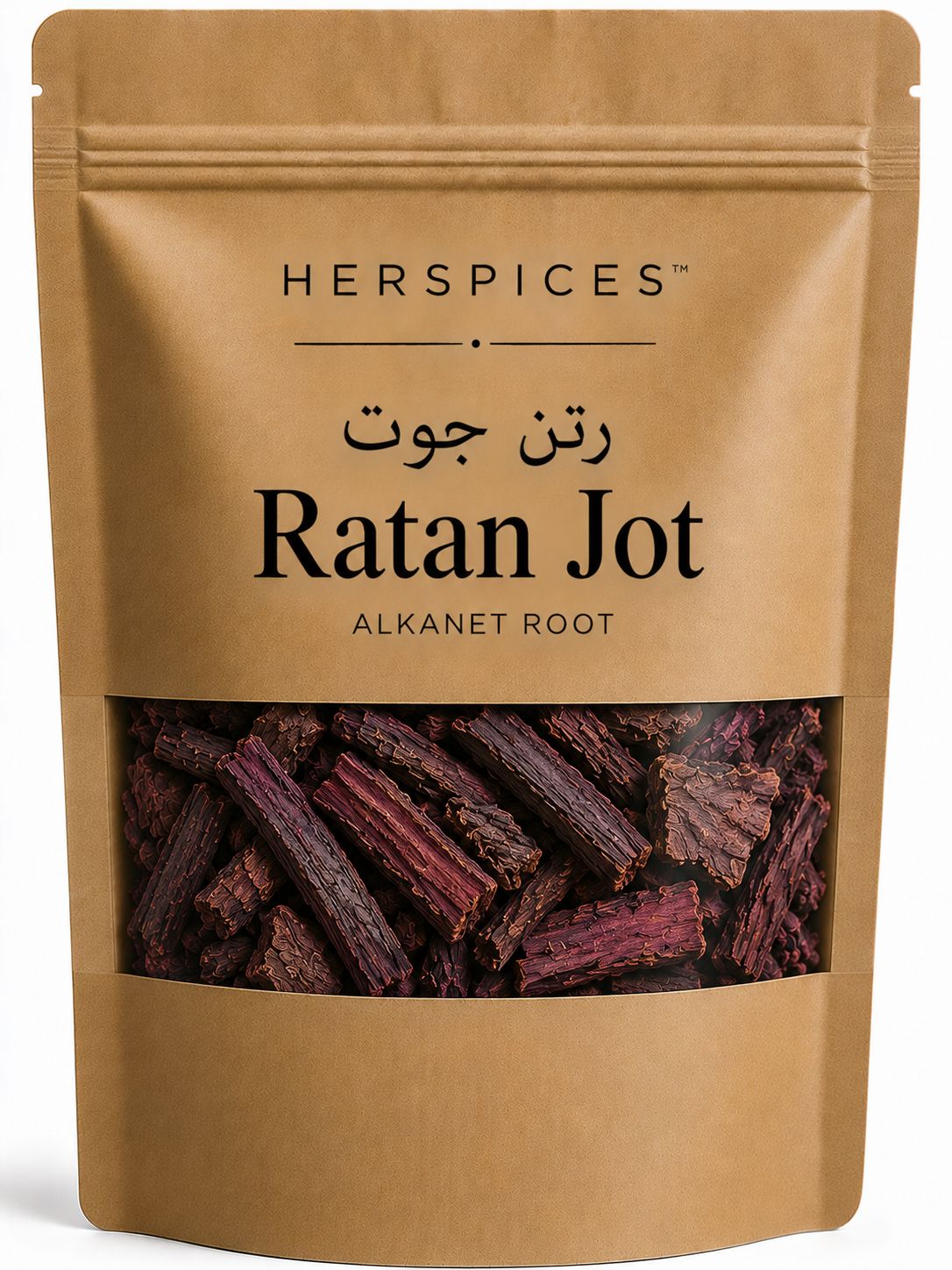
Ratan Jot, commonly known as Alkanet Root, is one of the most visually distinctive ingredients found in traditional herbal and culinary markets. Recognized by its dark reddish-purple outer appearance and vibrant natural colouring properties, Ratan Jot has been valued for generations across South Asia, the Middle East and parts of Europe.
Unlike many herbal roots that are primarily recognized by aroma or texture, Ratan Jot is most famous for the deep natural colour it releases when infused into oils and preparations. This unique characteristic has made it a sought-after ingredient in traditional recipes and natural colouring applications.
At HERSPICES, our Ratan Jot is carefully selected and packed to preserve its authentic appearance, colour and quality.
A Root Known for Its Natural Colour
Few herbal ingredients are as instantly recognizable as Ratan Jot.
The dried root naturally contains colour-producing compounds that create rich shades of red, burgundy and deep crimson when extracted.
Because of this characteristic, Ratan Jot has historically been valued not only as a traditional herbal ingredient but also as a natural colouring material.
Identifying Quality Ratan Jot
Premium Ratan Jot typically displays:
-
Dark reddish-purple root pieces
-
Woody root structure
-
Natural variation in size
-
Dense texture
-
Rich natural pigmentation
The intensity of colour often distinguishes authentic Ratan Jot from lower-grade material.
Botanical Background
Ratan Jot is commonly associated with plants from the Alkanna and related botanical groups, where the roots develop naturally occurring pigments.
The roots are harvested, cleaned and dried before entering traditional ingredient markets.
Its striking appearance makes it one of the easiest herbal roots to identify visually.
Traditional Culinary Applications
Ratan Jot has traditionally been used in various regional recipes where its natural colouring properties are appreciated.
Historically, it has been incorporated into:
-
Traditional rice preparations
-
Regional meat dishes
-
Oil infusions
-
Natural colouring preparations
-
Traditional culinary recipes
Its role as a natural colouring ingredient has contributed significantly to its continued popularity.
Naturally Occurring Plant Constituents
Ratan Jot contains several naturally occurring plant compounds, including:
-
Naphthoquinone pigments
-
Plant polyphenols
-
Natural antioxidants
-
Colour-producing botanical compounds
These naturally occurring constituents contribute to its unique appearance and traditional value.
Appearance and Storage
Quality Ratan Jot should display:
-
Deep red to purple tones
-
Natural woody root structure
-
Properly dried consistency
-
Minimal foreign material
Store in a cool, dry place away from direct sunlight and moisture. Keep the package sealed after opening to maintain freshness and preserve its natural colour.
Why Choose HERSPICES Ratan Jot?
-
Carefully selected root material
-
Naturally rich colour
-
Authentic appearance
-
Cleanly packed for freshness
-
Suitable for traditional culinary and herbal applications
-
Delivered across Pakistan
FAQ
What is Ratan Jot?
Ratan Jot is a traditional root ingredient commonly known as Alkanet Root, recognized for its natural deep red colouring properties.
Why is Ratan Jot red?
The root naturally contains colour-producing plant compounds that create rich red and burgundy tones.
What does Ratan Jot look like?
It typically appears as dark reddish-purple dried root pieces with a woody structure and natural variation in shape and size.
Is Ratan Jot the same as Alkanet Root?
Yes. Alkanet Root is the common English name frequently used for Ratan Jot.
Is Ratan Jot used in cooking?
Traditionally, Ratan Jot has been incorporated into various culinary preparations where its natural colouring properties are appreciated.
How should Ratan Jot be stored?
Store it in a sealed pouch or container in a cool, dry location away from moisture and direct sunlight.
Share