Herspices
Guggul Resin
Guggul Resin
Couldn't load pickup availability
Guggul Resin (Commiphora Mukul)
Guggul Resin is one of the oldest traded natural resins in South Asia and the Middle East. Obtained from the Commiphora mukul tree, this aromatic resin has been collected and valued for centuries due to its distinctive fragrance, unique appearance and historical significance in traditional ingredient systems.
Unlike gums such as Gond Katira, Gond Mochras or Gond Babul, Guggul belongs to a different category of natural plant materials known as resins. These resins are produced when trees release aromatic substances that gradually harden after exposure to air.
The result is a highly distinctive material recognized by its rich colour, resinous texture and characteristic earthy aroma.
At HERSPICES, our Guggul Resin is carefully selected and packed to preserve its natural quality and authentic appearance.
What is Guggul Resin?
Guggul is a natural resin obtained from the Commiphora mukul tree, a small thorny tree native to arid and semi-arid regions.
When the bark is naturally tapped, the tree releases resin that slowly hardens into irregular masses.
These resin deposits are collected, cleaned and prepared for traditional use.
Because it is produced naturally by the tree, every batch displays slight differences in colour, texture and appearance.
Resin vs Gum – Understanding the Difference
Many people confuse gums and resins, but they are different natural substances.
Natural gums such as:
-
Gond Katira
-
Gond Mochras
-
Gond Babul
are primarily composed of plant polysaccharides and often interact readily with water.
Guggul, however, is a resin.
Resins are known for:
-
Aromatic character
-
Sticky natural texture
-
Rich colour
-
Complex plant compounds
-
Distinctive fragrance
This difference makes Guggul unique among traditional tree-derived ingredients.
Appearance of Quality Guggul
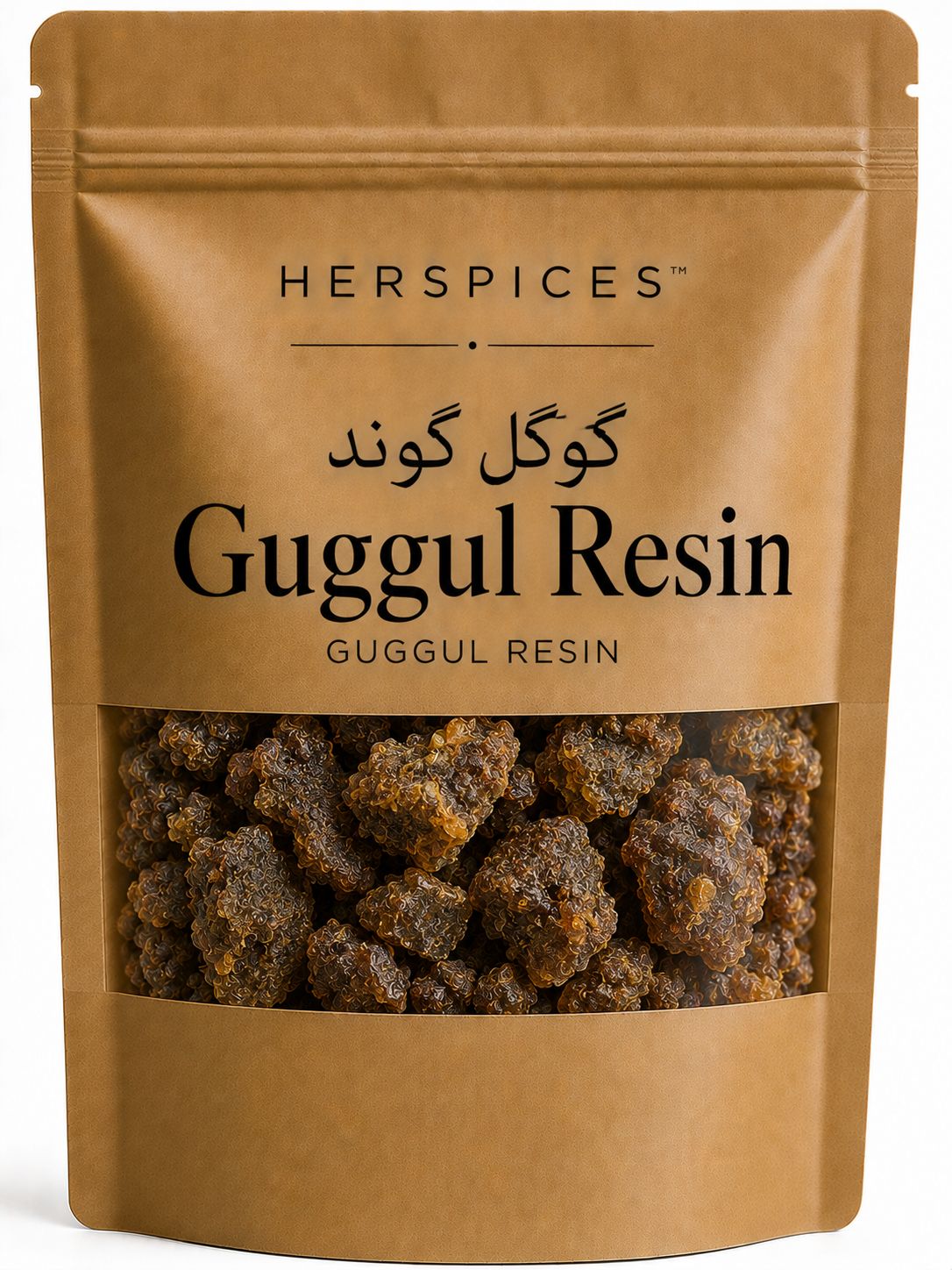
Premium Guggul Resin commonly displays:
-
Dark brown to reddish-brown colour
-
Irregular resin pieces
-
Slightly sticky texture
-
Natural variation in shape
-
Characteristic resin aroma
The appearance may vary depending on harvest conditions and the age of the resin.
The Commiphora Tree
Commiphora species have historically grown in dry regions where harsh environmental conditions encourage resin production.
These trees are found across:
-
Pakistan
-
India
-
Rajasthan desert regions
-
Arabian Peninsula
-
East Africa
Their ability to produce aromatic resin has contributed to their value for centuries.
Naturally Occurring Plant Constituents
Guggul Resin contains a variety of naturally occurring compounds, including:
-
Essential oils
-
Resin acids
-
Steroidal compounds
-
Plant terpenoids
-
Aromatic constituents
These compounds contribute to the resin's distinctive aroma and botanical significance.
Traditional Applications
For generations, Guggul Resin has been incorporated into:
-
Traditional herbal preparations
-
Aromatic ingredient blends
-
Classical botanical formulations
-
Resin collections
-
Traditional ingredient systems
Preparation methods vary according to local traditions and intended applications.
Storage Recommendations
Store in a cool, dry place away from direct sunlight and excessive heat. Because natural resins may soften in warmer temperatures, keeping the package sealed and protected from heat helps maintain quality.
Why Choose HERSPICES Guggul Resin?
-
Carefully selected natural resin
-
Authentic Commiphora Mukul source
-
Rich natural aroma
-
Cleanly packed for freshness
-
Suitable for traditional ingredient applications
-
Delivered across Pakistan
FAQ
What is Guggul Resin?
Guggul Resin is a natural aromatic resin obtained from the Commiphora mukul tree.
Is Guggul a gum or a resin?
Guggul is a resin, not a gum. Resins possess different physical and aromatic characteristics compared to natural gums.
What does Guggul Resin look like?
It typically appears as dark brown to reddish-brown irregular resin pieces with a naturally aromatic character.
Why is Guggul aromatic?
The resin naturally contains essential oils and aromatic plant compounds that contribute to its characteristic fragrance.
Where does Guggul come from?
Guggul is obtained from the Commiphora mukul tree, which grows in arid and semi-arid regions of South Asia and neighbouring areas.
How should Guggul Resin be stored?
Store it in a sealed pouch in a cool, dry place away from direct sunlight and excessive heat.
Share