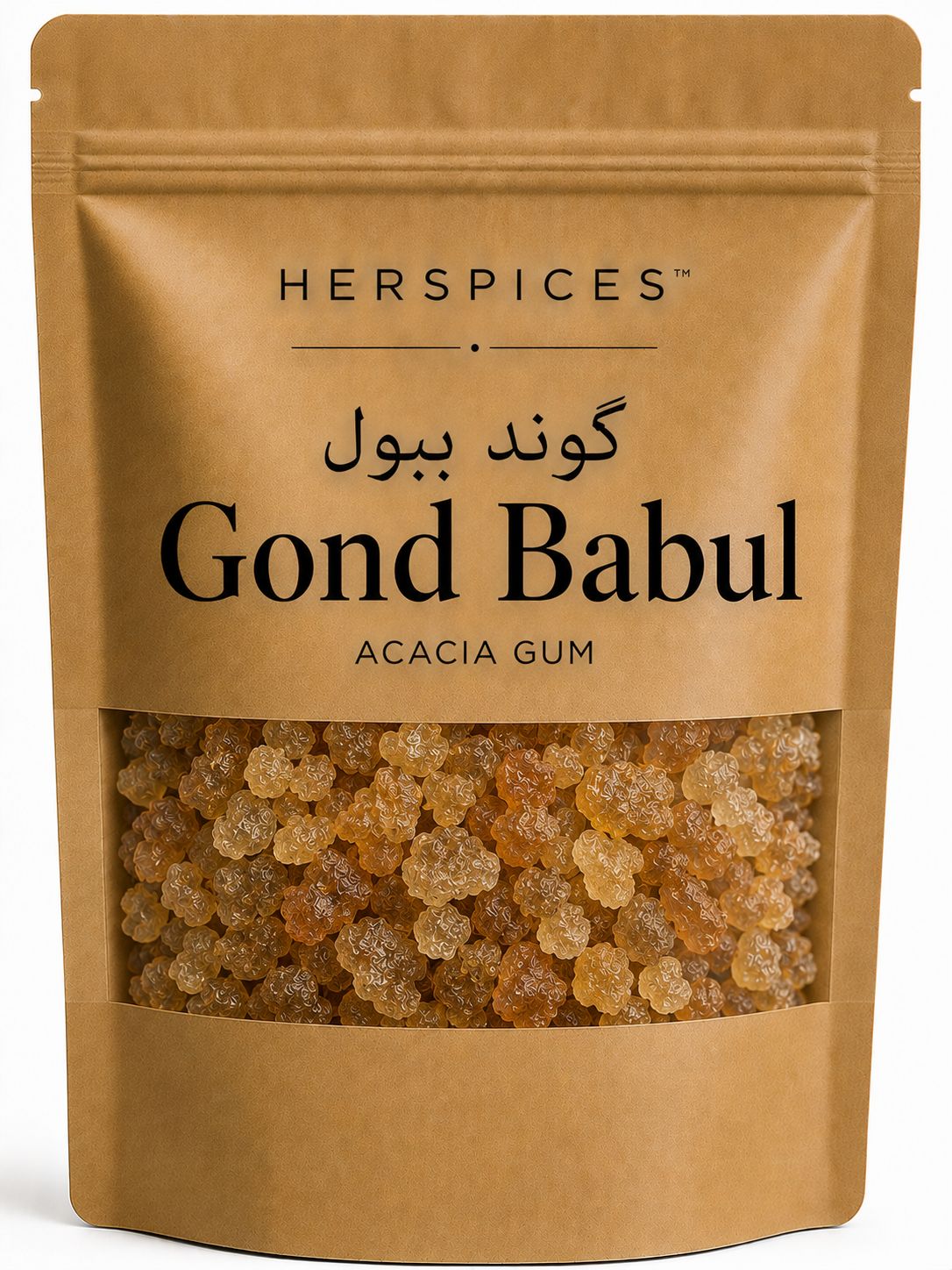
Herspices
Gond Babul
Gond Babul
Couldn't load pickup availability
Gond Babul (Acacia Gum)
Gond Babul, commonly known as Acacia Gum, is a natural tree gum obtained from various Acacia species. For centuries, this naturally occurring gum has been harvested from tree bark and traded throughout Africa, the Middle East and South Asia, where it became an important ingredient in traditional food, herbal and industrial applications.
Unlike roots, flowers or seeds, Gond Babul is formed naturally when Acacia trees release gum that hardens upon exposure to air. The resulting crystals develop unique shapes, colours and textures that make Acacia Gum one of the most recognizable natural gums in the world.
At HERSPICES, our Gond Babul is carefully selected and packed to preserve its natural appearance, purity and quality.
What Makes Gond Babul Different?
Among natural gums, Gond Babul is particularly known for its smooth, glass-like appearance and clean amber tones.
Quality Acacia Gum often displays:
-
Light amber to golden colour
-
Hard crystal-like pieces
-
Natural translucency
-
Smooth surfaces
-
Irregular shapes
Because the gum develops naturally on living trees, every piece is unique.
The Acacia Tree Connection
Gond Babul originates from Acacia trees that thrive in dry and semi-arid environments.
These trees are found across:
-
Pakistan
-
India
-
Sudan
-
Egypt
-
Saudi Arabia
-
Various African regions
When the bark experiences natural stress or seasonal changes, the tree releases sap that gradually hardens into gum deposits. These deposits are then collected and cleaned before entering traditional ingredient markets.
One of the World's Most Traded Natural Gums
Acacia Gum has been traded internationally for hundreds of years.
Historically, it became an important commodity because of its versatility and stability. Its widespread use helped establish it as one of the most commercially significant natural gums available today.
This long trading history continues to contribute to its recognition across global ingredient markets.
Naturally Occurring Plant Components
Gond Babul primarily consists of naturally occurring polysaccharides and soluble plant fibres.
These natural compounds contribute to:
-
Its structure
-
Its stability
-
Its traditional applications
-
Its ability to interact with water-based preparations
Appearance and Quality Indicators
Authentic Gond Babul generally shows:
-
Clean crystal formation
-
Natural colour variation
-
Minimal dust or impurities
-
Firm dried texture
-
Characteristic gum transparency
High-quality Acacia Gum should maintain its natural appearance without excessive processing.
Traditional Applications
For generations, Gond Babul has been incorporated into:
-
Traditional ingredient preparations
-
Food applications
-
Botanical ingredient blends
-
Traditional formulations
-
Regional culinary uses
Methods of preparation vary according to local traditions and intended applications.
Storage Recommendations
Store in a cool, dry place away from moisture and direct sunlight. Keep the package sealed after opening to preserve freshness and maintain the natural quality of the gum crystals.
Why Choose HERSPICES Gond Babul?
-
Carefully selected Acacia Gum
-
Naturally sourced tree gum
-
Authentic crystal appearance
-
Cleanly packed for freshness
-
Suitable for traditional ingredient applications
-
Delivered across Pakistan
FAQ
What is Gond Babul?
Gond Babul is a natural gum obtained from Acacia trees and is commonly known as Acacia Gum.
What does Gond Babul look like?
It typically appears as amber-coloured translucent gum crystals with naturally irregular shapes.
Is Gond Babul the same as Acacia Gum?
Yes. Acacia Gum is the common English name for Gond Babul.
How is Gond Babul produced?
The gum is naturally released by Acacia trees and hardens into crystal-like deposits that are later collected and cleaned.
Why do Gond Babul crystals vary in colour?
Natural differences in tree species, climate and harvesting conditions can create slight variations in colour and appearance.
How should Gond Babul be stored?
Store it in a sealed pouch or container in a cool, dry location away from moisture and direct sunlight.
Share