Herspices
Giloy Dried Stems
Giloy Dried Stems
Couldn't load pickup availability
Giloy Dried Stems (Guduchi)
Giloy, also known as Guduchi and scientifically classified as Tinospora cordifolia, is a climbing shrub widely recognized throughout South Asia. Unlike many herbs where leaves or roots are the primary harvested material, Giloy is traditionally valued for its mature stems, which are carefully harvested, cut and dried for later use.
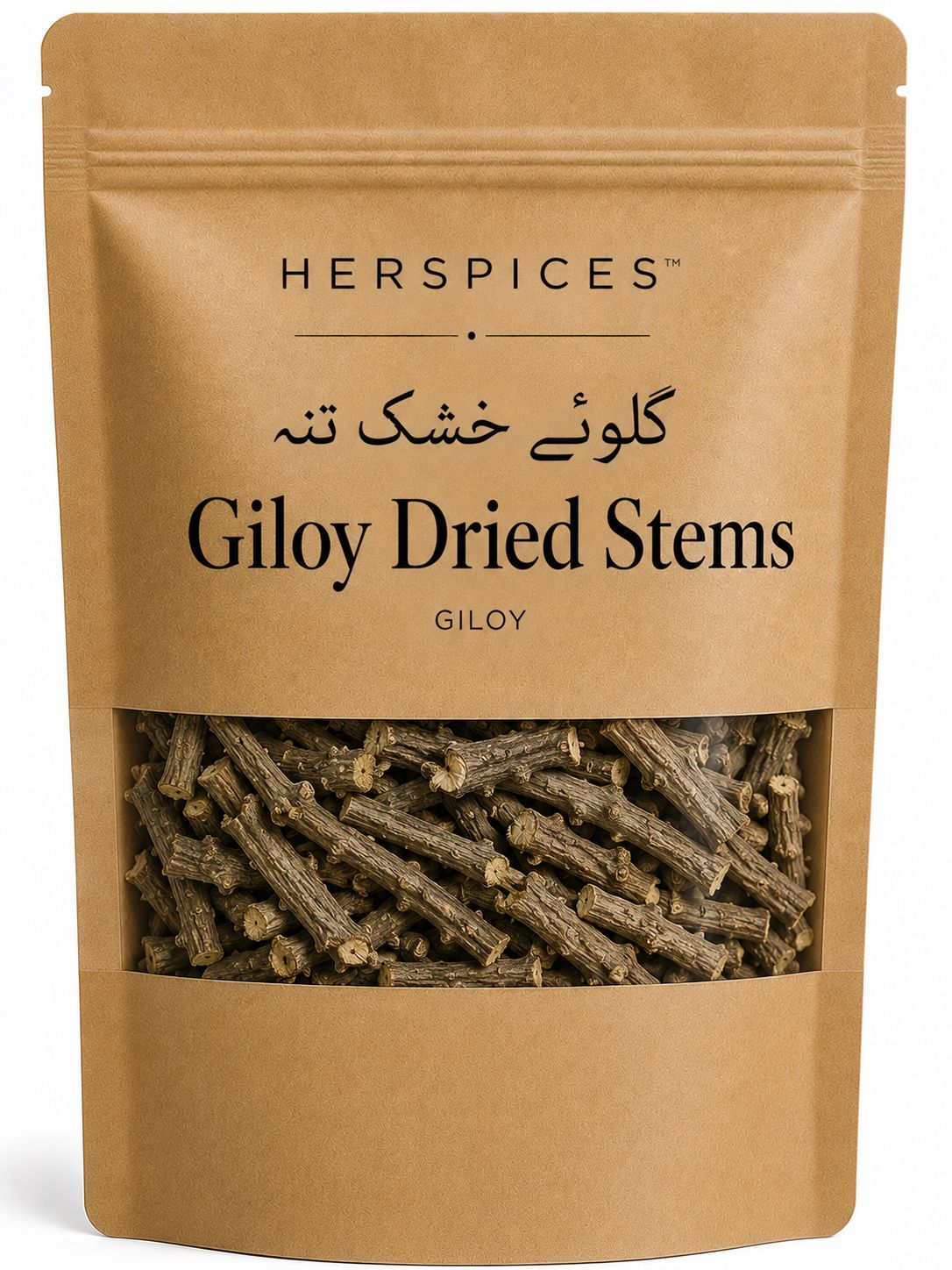
The stems possess a distinctive appearance characterized by natural nodes, irregular shapes and a fibrous internal structure. These characteristics make Giloy easily recognizable among traditional herbal ingredients.
At HERSPICES, our Giloy Dried Stems are carefully selected and packed to preserve their natural character and authenticity.
A Climbing Plant with a Long Heritage
Giloy has been part of traditional herbal culture across the Indian subcontinent for centuries. The plant naturally grows by climbing trees and structures, developing thick stems that are later harvested when mature.
Because the stem is the most commonly utilized part of the plant, quality selection focuses heavily on stem maturity, appearance and drying standards rather than leaf content.
Recognizing Authentic Giloy Stems
Quality Giloy Dried Stems typically display:
-
Cylindrical stem segments
-
Natural nodes and joints
-
Light brown to grey-green coloration
-
Fibrous interior texture
-
Variation in thickness and length
No two stems are perfectly identical, which is a normal characteristic of naturally harvested botanical materials.
Botanical Profile
Giloy belongs to the Menispermaceae family and thrives in tropical and subtropical climates.
The plant is commonly found in:
-
Pakistan
-
India
-
Nepal
-
Bangladesh
-
Sri Lanka
Its climbing growth habit allows stems to mature over time, producing the thick woody material commonly seen in dried herbal markets.
Naturally Occurring Plant Constituents
Giloy stems contain numerous naturally occurring botanical compounds, including:
-
Alkaloids
-
Diterpenoid lactones
-
Glycosides
-
Polysaccharides
-
Phenolic compounds
These constituents contribute to the plant's longstanding significance in traditional herbal systems.
Traditional Uses of Giloy
For generations, Giloy stems have been incorporated into:
-
Herbal decoctions
-
Traditional botanical preparations
-
Herbal powders
-
Herbal ingredient blends
-
Classical herbal formulations
Preparation methods vary according to regional traditions and individual preferences.
Why Stem Quality Matters
With Giloy, the stem itself is the primary material of interest. Mature stems generally display stronger structural characteristics, visible nodes and a well-developed fibrous interior.
When purchasing dried Giloy, consumers typically look for authentic stem pieces rather than excessive leaf or miscellaneous plant material.
Storage Recommendations
Store in a cool, dry place away from direct sunlight and moisture. Keep the package sealed after opening to maintain freshness and preserve the natural quality of the stems.
Why Choose HERSPICES Giloy Dried Stems?
-
Carefully selected mature stems
-
Authentic dried stem appearance
-
Naturally harvested material
-
Cleanly packed for freshness
-
Suitable for traditional herbal preparations
-
Delivered across Pakistan
FAQ
What is Giloy?
Giloy, also known as Guduchi, is a climbing plant scientifically known as Tinospora cordifolia and traditionally valued for its stems.
Which part of Giloy is commonly used?
The mature stem is the most commonly harvested and utilized part of the plant.
What do Giloy Dried Stems look like?
They typically appear as cylindrical stem segments with natural nodes, light brown to grey-green coloration and a fibrous interior.
Is Giloy the same as Guduchi?
Yes. Guduchi is one of the most widely used traditional names for Giloy.
Why do Giloy stems vary in thickness?
Natural variation occurs because stems are harvested from living plants of different ages and growth conditions.
How should Giloy Dried Stems be stored?
Store them in a sealed pouch in a cool, dry location away from moisture and direct sunlight.
Share