Herspices
Amba Haldi
Amba Haldi
Couldn't load pickup availability
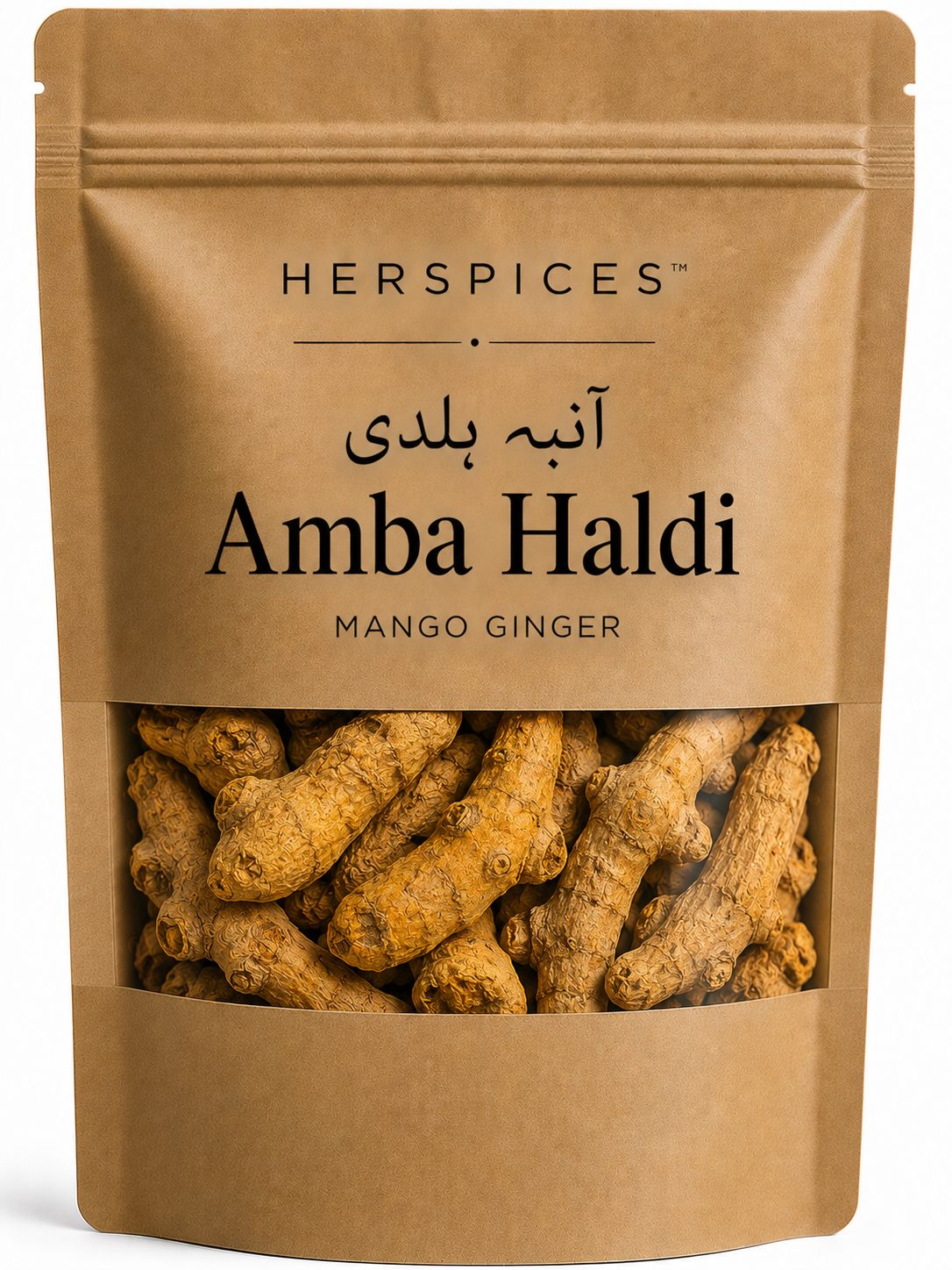
Amba Haldi (Mango Ginger)
Amba Haldi, commonly known as Mango Ginger, is a unique rhizome that combines characteristics of both ginger and turmeric. Scientifically classified as Curcuma amada, this remarkable plant belongs to the turmeric family but is distinguished by an aroma that closely resembles raw mango.
Its unusual fragrance has made Amba Haldi a highly valued ingredient in traditional culinary and herbal traditions across South Asia. Unlike regular turmeric, which is recognized for its earthy aroma and bright yellow colour, Amba Haldi is appreciated for its refreshing mango-like scent and distinctive flavour profile.
At HERSPICES, our Amba Haldi is carefully selected and packed to preserve its natural aroma, appearance and quality.
Why is it Called Mango Ginger?
The name "Mango Ginger" comes from the rhizome's characteristic fragrance.
When cut or crushed, quality Amba Haldi often releases a fresh aroma that resembles unripe mango while maintaining the structural appearance of a ginger or turmeric rhizome.
This unique combination has made it one of the most recognizable rhizomes in traditional ingredient markets.
Appearance and Characteristics
Premium Amba Haldi typically displays:
-
Irregular rhizome pieces
-
Light beige to pale yellow interior
-
Fibrous structure
-
Natural variation in shape and size
-
Distinct mango-like aroma
Because it is a naturally harvested rhizome, variation between pieces is expected and reflects authenticity.
Botanical Profile
Amba Haldi belongs to the Zingiberaceae family, the same botanical family that includes:
-
Turmeric
-
Ginger
-
Galangal
-
Cardamom
The plant is cultivated throughout South Asia and harvested for its underground rhizomes.
Its botanical relationship to turmeric explains its appearance, while its aroma distinguishes it from other members of the family.
Traditional Culinary Uses
Amba Haldi has long been appreciated in traditional food preparation.
Historically, it has been used in:
-
Pickle preparations
-
Seasonal recipes
-
Traditional condiments
-
Spice blends
-
Regional culinary dishes
Its fresh aroma contributes to its popularity in traditional kitchens.
Naturally Occurring Plant Constituents
Amba Haldi contains a variety of naturally occurring botanical compounds, including:
-
Essential oils
-
Curcuminoid-related compounds
-
Polyphenols
-
Plant antioxidants
-
Natural aromatic constituents
These naturally occurring compounds contribute to its distinctive aroma and botanical significance.
Understanding Rhizomes
Unlike roots, a rhizome is an underground stem structure that stores nutrients and supports plant growth.
Amba Haldi is classified as a rhizome, similar to ginger and turmeric, which explains its segmented appearance and fibrous texture.
Storage Recommendations
Store in a cool, dry place away from direct sunlight and moisture. Keep the package sealed after opening to preserve freshness and maintain its natural aroma.
Why Choose HERSPICES Amba Haldi?
-
Carefully selected rhizome material
-
Naturally aromatic character
-
Authentic Mango Ginger appearance
-
Cleanly packed for freshness
-
Suitable for traditional culinary and herbal applications
-
Delivered across Pakistan
FAQ
What is Amba Haldi?
Amba Haldi is a rhizome known as Mango Ginger, scientifically classified as Curcuma amada.
Why is it called Mango Ginger?
It is called Mango Ginger because its aroma naturally resembles raw mango while its appearance resembles ginger or turmeric.
Is Amba Haldi the same as turmeric?
No. Although both belong to the same botanical family, Amba Haldi has a distinct aroma and different traditional uses.
What does Amba Haldi look like?
It appears as pale beige to light yellow rhizome pieces with a fibrous interior and naturally irregular shape.
Is Amba Haldi a root?
No. Amba Haldi is a rhizome, which is an underground stem rather than a true root.
How should Amba Haldi be stored?
Store it in a sealed pouch or container in a cool, dry place away from moisture and direct sunlight.
Share