Herspices
Acacia Bark (Chal Kikar)
Acacia Bark (Chal Kikar)
Couldn't load pickup availability
Acacia Bark (Chal Kikar)
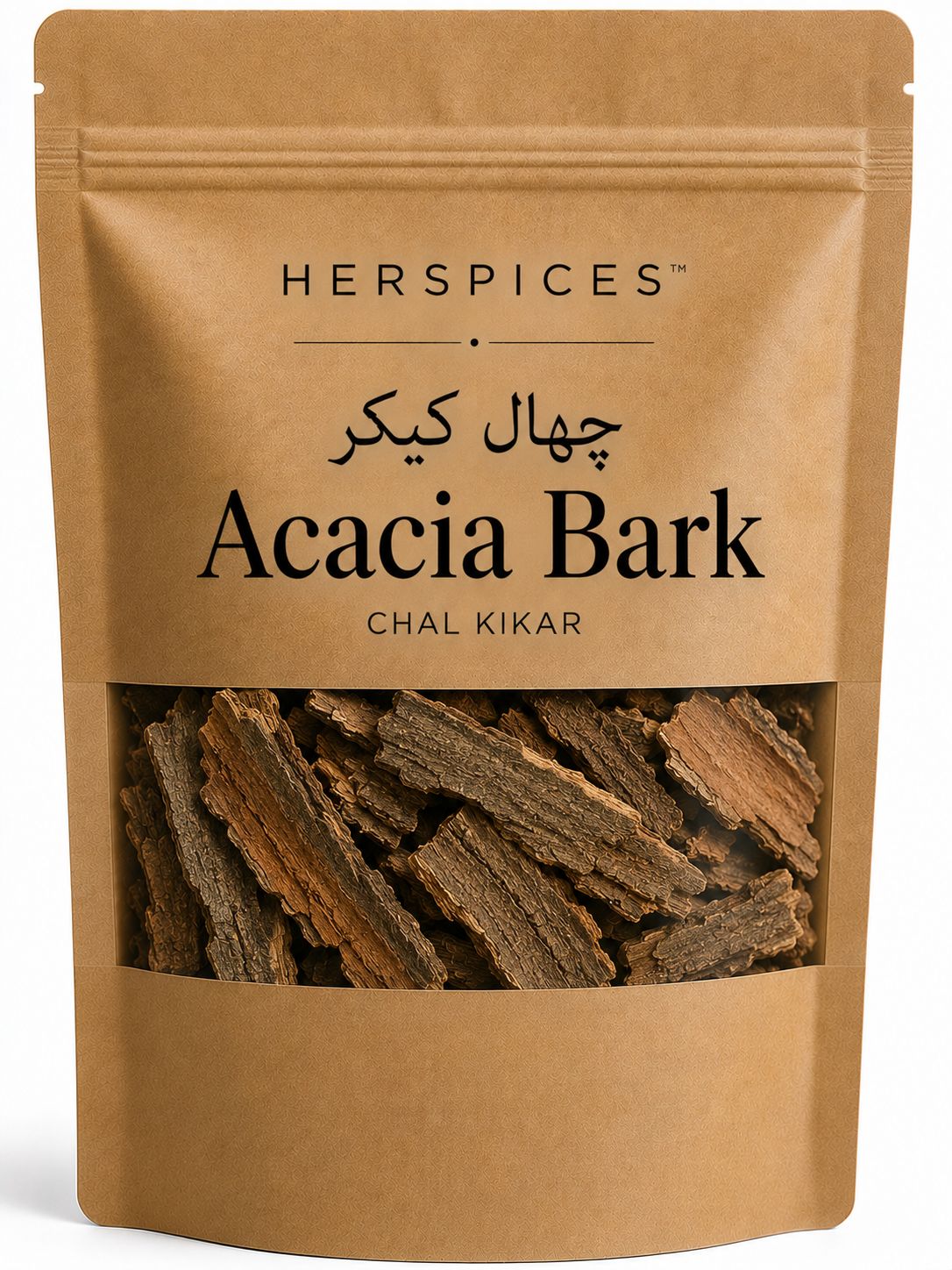
Acacia Bark, commonly known in Pakistan as Chal Kikar, is obtained from the bark of Acacia trees that grow throughout South Asia, the Middle East and Africa. Recognized for its rough outer texture and naturally fibrous structure, Acacia Bark has been traded and utilized in traditional ingredient markets for generations.
Unlike roots, leaves or seeds, bark is harvested directly from the outer protective layer of the tree. This gives Acacia Bark a distinctive appearance characterized by layered textures, natural ridges and variations in thickness.
At HERSPICES, our Acacia Bark is carefully selected and packed to preserve its authentic appearance and natural quality.
What is Chal Kikar?
The term "Chal Kikar" refers to the dried bark obtained from Kikar trees, which belong to the Acacia family. These trees are widely distributed across Pakistan and are easily recognized for their resilience in dry and semi-arid environments.
The bark is traditionally harvested, dried and prepared for use as a natural ingredient in various traditional applications.
Identifying Quality Acacia Bark
Premium Acacia Bark typically displays:
-
Natural bark strips or pieces
-
Brown to dark brown coloration
-
Layered woody texture
-
Visible outer and inner bark surfaces
-
Variation in thickness and size
Because bark develops naturally over many years of tree growth, each piece is unique in appearance.
A Tree Native to the Region
One reason Acacia Bark remains popular in Pakistan is the familiarity of the Kikar tree itself. Found throughout rural and agricultural areas, the tree has long been part of the local landscape.
Its widespread presence has contributed to the bark becoming a recognized ingredient within traditional herbal and natural product markets.
Naturally Occurring Plant Constituents
Acacia Bark contains a variety of naturally occurring botanical compounds, including:
-
Tannins
-
Polyphenols
-
Flavonoids
-
Plant gums
-
Natural antioxidants
These naturally occurring compounds contribute to the botanical importance of Acacia species.
Traditional Applications
For generations, Acacia Bark has been incorporated into:
-
Traditional herbal preparations
-
Botanical ingredient blends
-
Decoctions
-
Powdered herbal formulations
-
Regional herbal practices
Preparation methods vary according to local traditions and intended use.
Bark vs. Root vs. Wood
Acacia Bark is distinct from roots and wood.
The bark forms the protective outer layer of the tree and is identified by:
-
Layered structure
-
Rough texture
-
Fibrous composition
-
Natural colour variations
These characteristics help distinguish genuine bark material from other tree-derived ingredients.
Storage Recommendations
Store in a cool, dry place away from moisture and direct sunlight. Keep the package sealed after opening to preserve freshness and maintain the natural quality of the bark.
Why Choose HERSPICES Acacia Bark?
-
Carefully selected bark material
-
Authentic Chal Kikar appearance
-
Naturally dried product
-
Cleanly packed for freshness
-
Suitable for traditional herbal preparations
-
Delivered across Pakistan
FAQ
What is Acacia Bark?
Acacia Bark is the dried bark obtained from Acacia trees, commonly known as Chal Kikar in Pakistan.
What does Chal Kikar look like?
It typically appears as brown bark pieces with a rough outer texture and layered woody structure.
Is Chal Kikar the same as Acacia Bark?
Yes. Chal Kikar is the traditional local name commonly used for Acacia Bark.
Why do bark pieces vary in thickness?
Bark develops naturally over time, so differences in age, growth conditions and harvesting can create variation in thickness and texture.
What colour is quality Acacia Bark?
Quality Acacia Bark generally ranges from medium brown to dark brown with natural variation between pieces.
How should Acacia Bark be stored?
Store it in a sealed pouch or container in a cool, dry location away from moisture and direct sunlight.
Share